






From SDoH Data to Maternal Health Action: Turning Insight into Impact
This month, a newly published report from our friends at Sage Growth Partners analyzes the disconnect between health plans’ SDoH data and their ability to effectively act on it when it comes to their maternal and infant health populations. At ProgenyHealth, we believe addressing social or non-clinical drivers of health is foundational to improved maternal and infant health outcomes.
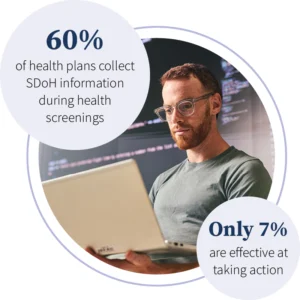
According to the report “From SDoH Data to Maternal Health Action”, a majority of health plans surveyed (60%) collect social drivers of health information during their health screenings, however only 7% consider themselves very effective at turning that information into action. Given that social drivers can account for as much as 90% of a population’s health outcomes, this dichotomy isn’t just frustrating, it is potentially leaving mothers and infants at risk.
As part of the report, Sage Growth Partners also interviewed mothers, who confirmed the struggles health plans are facing. Mothers reported mental health and stress, transportation, housing stability, and food security among their most significant challenges during pregnancy and postpartum. Yet support often falls short. For example, only 32% reported receiving mental health counseling or screening, and just 22% received transportation assistance.
The report argues that health plans must move beyond screening and begin operationalizing SDoH data through a five-step maturity path:
- identifying social needs,
- mapping those needs to maternal and infant risk,
- connecting members to resources,
- tracking whether needs are resolved, and
- using those insights to guide future investments.
While traditional SDoH frameworks provide an important foundation, the complexity of maternal and NICU populations requires a more specialized approach. ProgenyHealth’s work expands beyond broad screening categories to capture population-specific risks such as provider language access, health literacy, internet access, maternal health issues, quality of housing, intimate partner violence, and other factors that can directly impact outcomes for mothers and infants.
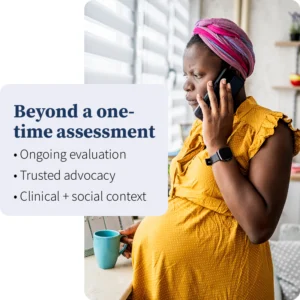
Rather than relying on a one-time assessment, ProgenyHealth’s model is built around ongoing evaluation, trusted advocacy, and integration of both clinical and social context. We connect identified risks to interventions, resources, and follow-up, taking social driver data and turning it into to action.
Our experience has also shown that better SDoH data enables better decisions. Specialized insights help ProgenyHealth Case Managers identify risks earlier, personalize outreach, strengthen community partnerships, and improve both clinical and financial outcomes. More importantly, this data creates opportunities to uncover challenges that never appear in claims data alone.
The report concludes that health plans should move from simply identifying needs to tracking resolution and investing in interventions that demonstrably close gaps. At ProgenyHealth, we see that progression every day. By combining specialized SDoH intelligence with maternity and NICU case management, we help health plans transform data into meaningful action, improving access, member experience, and outcomes for the families who need support most.
To access Sage Growth Partners report “From SDoH Data to Maternal Health Action”, click here. To learn more about ProgenyHealth’s specialized approach, read our recent LinkedIn Newsletter.
 Prev
PrevView All Posts
Stay Informed
Subscribe to the latest maternity + NICU updates & news