


 Filed Under: Health Economics


Unpacking the Shift to Unbundled Maternity Care
For decades, maternity care in the United States has been reimbursed through a single bundled payment covering prenatal visits, labor and delivery, and postpartum care. Introduced in the 1990s, this model assumed a predictable, linear pregnancy journey. But as maternal and infant health experts know, pregnancies are rarely that straightforward.
Beginning January 1, 2027, new Current Procedural Terminology (CPT) codes approved by the American Medical Association will replace the traditional global maternity payment with separate codes for prenatal care, labor management, delivery, and postpartum services. This shift toward unbundling represents more than a billing change—it signals a new operational reality for payers, providers, and care management teams.
Earlier Visibility, Greater Complexity
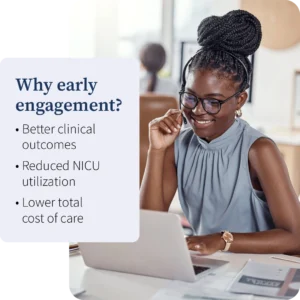
Unbundling will significantly change when clinical risk becomes visible. Instead of waiting until delivery for a comprehensive claim, plans will begin to see activity earlier in pregnancy as prenatal visits, diagnostic tests, and specialty services are billed individually.
Earlier claims visibility creates an important opportunity: identifying high-risk pregnancies sooner and intervening before complications escalate. For health plans or their case management partners, this could mean engaging members earlier and more proactively. This is especially true at a time when an increasing number of women with preexisting conditions like diabetes or obesity are becoming pregnant.
However, the increased volume and timing of claims also introduces complexity. Not every early signal indicates meaningful risk. Differentiating clinically relevant warning signs from normal, benign pregnancy-related changes will be critical. Without careful interpretation, more data could lead to confusion rather than better outcomes.
The Member Experience Takes Center Stage
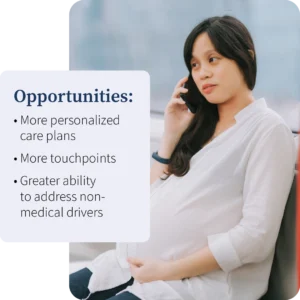
While unbundling has the potential to improve risk identification, it does present greater complexity for both health plans and members. More touchpoints create the potential for personalized care—such as tailored visit schedules, telehealth options, and support for social drivers of health—but they can also lead to fragmented experiences and greater administrative burden if not carefully coordinated.
The American College of Obstetricians and Gynecologists (ACOG) has emphasized that more flexible, personalized prenatal care works best when paired with clear communication and shared decision-making. Without this, the benefits of tailored care could be offset by uncertainty and lack of alignment.
Importantly, most members should not see higher out-of-pocket costs for prenatal care. The Affordable Care Act requires most commercial plans and Medicaid expansion programs to cover recommended preventive pregnancy services without cost sharing. However, services such as labor and delivery may still involve cost sharing for some members, reinforcing the need for strong education and care navigation throughout the pregnancy journey.
Why Case Management Matters More Than Ever

In this environment, care management shifts from episodic support to full-journey support—requiring continuous risk stratification, proactive outreach, and coordination across a growing network of providers and services. More data improves visibility, but it also demands stronger systems and expertise to translate insight into action.
High-quality case management helps ensure that care is delivered at the right time, by the right provider, and in alignment with evidence-based guidelines. By coordinating across prenatal care, diagnostics, specialty and resource referrals, and postpartum follow-up, case managers provide much-needed continuity in an increasingly complex system.
Just as importantly, they help interpret the growing volume of data. In an unbundled environment, value isn’t tied to any single service or code—it lies in the ability to connect the dots across the entire maternity journey.
The Bottom Line
Unbundling presents a clear opportunity to improve early risk identification and personalize care. But without strong coordination, communication, and education, it could also drive fragmentation and unnecessary costs.
In this new model, effective case management serves as the connective tissue—ensuring that earlier insights and increased data translate into better outcomes, not greater complexity.
 Prev
PrevView All Posts
Stay Informed
Subscribe to the latest maternity + NICU updates & news